
Every parent wants their child to learn faster, remember better, and stay focused in school. One of the most effective and enjoyable ways to develop these skills is through memory games for kids.
Memory games are not just entertaining activities—they are powerful brain-training exercises that strengthen a child’s memory, concentration, attention span, problem-solving abilities, and overall cognitive development .
Children learn best when they are having fun. Memory games transform learning into an engaging experience while helping young minds develop essential skills for academic success and everyday life.
In this article, we’ll explore the best memory games for kids, their benefits, and how they contribute to brain development memory games for kids.
Why Are Memory Games Important for Children?
A child’s memory plays a vital role in learning and development.
Strong memory skills help children:
- Remember classroom lessons
- Follow instructions
- Improve reading comprehension
- Solve mathematical problems
- Build confidence
- Enhance concentration
Memory games stimulate different areas of the brain and encourage children to think, analyze, and recall information more effectively memory games for kids.
Benefits of Memory Games for Kids
1. Improves Memory Retention
Memory games train the brain to store and retrieve information efficiently.
Children become better at remembering:
- Facts
- Numbers
- Instructions
- Vocabulary
- Academic concepts
2. Enhances Concentration
Many memory games require focused attention.
Regular practice improves:
- Attention span
- Focus during studies
- Listening skills
3. Develops Problem-Solving Skills
Memory challenges encourage children to think critically and make decisions quickly.
This strengthens logical reasoning and analytical abilities.
4. Boosts Academic Performance
Children with stronger memory skills often perform better in:
- Mathematics
- Science
- Languages
- Social Studies
Better memory leads to better learning outcomes.
5. Builds Confidence
Successfully completing memory challenges gives children a sense of achievement.
This boosts self-confidence and encourages active participation in learning activities.
15 Best Memory Games for Kids
1. Matching Card Game
This classic game is one of the best memory-building activities.
How to Play
- Place cards face down.
- Children turn over two cards at a time.
- If they match, keep them.
- If not, turn them back.
Benefits
- Visual memory improvement
- Concentration development
- Pattern recognition
2. What’s Missing?
How to Play
- Place several objects on a table.
- Allow children to observe.
- Remove one item secretly.
- Ask them to identify what’s missing.
Benefits
- Observation skills
- Short-term memory enhancement
3. Simon Says
A fun listening and memory game.
Example
“Simon says touch your nose.”
Children must remember and follow instructions correctly.
Benefits
- Listening skills
- Working memory
- Focus
4. Number Sequence Challenge
Read a series of numbers aloud.
Example:
5 – 8 – 2 – 9
Ask the child to repeat them.
Gradually increase the difficulty.
Benefits
- Working memory
- Mental processing speed
5. Memory Tray Game
How to Play
- Place 10 objects on a tray.
- Allow children 30 seconds to observe.
- Cover the tray.
- Ask them to recall the items.
Benefits
- Visual memory
- Recall ability
6. Story Recall Game
Read a short story and ask questions afterward.
Questions
- Who was the main character?
- What happened first?
- How did the story end?
Benefits
- Listening comprehension
- Long-term memory
7. Puzzle Solving
Jigsaw puzzles challenge children to remember shapes and patterns.
Benefits
- Spatial memory
- Problem-solving skills
- Concentration
8. Mental Math Challenges
Mental Math is one of the most effective memory games for brain development.
Examples
- 25 + 15
- 45 – 12
- 8 × 7
Children solve problems without using paper or calculators.
Benefits
- Working memory improvement
- Faster thinking
- Better concentration
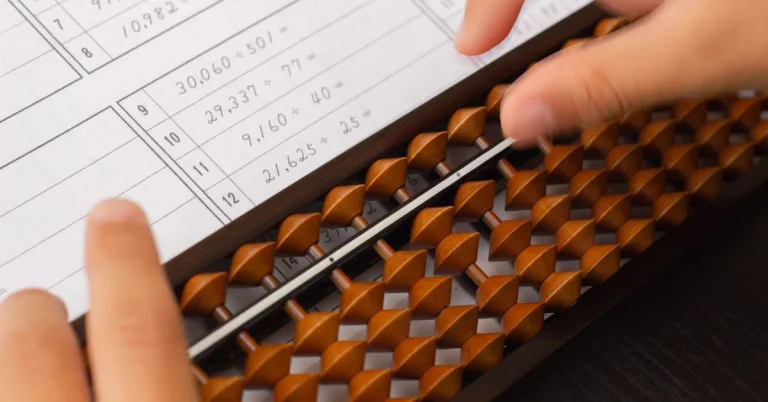
9. Abacus Visualization Games
Abacus training teaches children to visualize numbers mentally.
As children progress, they imagine the abacus in their minds and perform calculations memory games for kids memory games for kids.
Benefits
- Exceptional memory development
- Improved concentration
- Enhanced visualization skills
10. Word Chain Game
Example
Apple → Elephant → Tiger → Rabbit
Each new word begins with the last letter of the previous word.
Benefits
- Vocabulary improvement
- Memory strengthening
11. Picture Memory Game
Show a picture for 30 seconds.
Remove it and ask:
- What color was the car?
- How many animals were there?
Benefits
- Visual memory enhancement
- Observation skills
12. Sudoku for Kids
Sudoku develops logical thinking and memory.
Children remember number placements while solving puzzles.
Benefits
- Concentration
- Reasoning skills
- Memory retention
13. Chess
Chess is one of the most powerful brain-training games.
Children remember:
- Strategies
- Patterns
- Opponent moves
Benefits
- Strategic thinking
- Long-term memory
- Focus
14. Shopping List Memory Game
Create a shopping list and ask children to memorize it.
Example:
Book Your FREE Demo Class
Fill this quick form — our team will email & call you back within 24 hours.
- Milk
- Bread
- Apples
- Rice
Then ask them to repeat the list.
Benefits
- Everyday memory practice
- Recall improvement
15. Spot the Difference
Children compare two similar images and identify differences.
Benefits
- Attention to detail
- Visual memory
- Concentration
How Mental Math Improves Memory in Children
Mental Math is more than a calculation skill.
When children perform calculations mentally, they:
- Hold numbers in working memory
- Process information quickly
- Visualize numerical patterns
This strengthens memory and cognitive development significantly.
Children who practice Mental Math regularly often show improvements in:
- Academic performance
- Concentration
- Confidence
- Problem-solving abilities
Why Abacus Training is Excellent for Memory Development
Abacus training is considered one of the most effective memory enhancement methods for children memory games for kids.
Through visualization techniques, children learn to:
- Remember bead positions
- Perform calculations mentally
- Strengthen both brain hemispheres
Benefits include:
✔ Better concentration
✔ Stronger memory
✔ Faster calculations
✔ Improved learning ability
✔ Greater confidence
Tips for Parents to Improve Memory Through Games
Play Daily
Even 15–20 minutes of memory games can make a difference.
Make Learning Fun
Avoid pressure and encourage participation.
Increase Difficulty Gradually
Challenge children without overwhelming them.
Encourage Mental Activities
Include puzzles, reading, and Mental Math exercises.
Celebrate Progress
Recognize effort and achievements to build confidence.
How Brain Skool Helps Children Improve Memory
At Brain Skool, children participate in specialized brain development programs that combine:
- Abacus Training
- Mental Math
- Memory Development Activities
- Concentration Exercises
- Visualization Techniques
These scientifically designed programs help children:
- Improve memory retention
- Enhance focus
- Develop faster calculation skills
- Build confidence
- Achieve better academic performance
Brain Skool’s approach focuses on nurturing young minds through fun, engaging, and effective learning methods.
Conclusion
Memory games are one of the most enjoyable and effective ways to improve a child’s cognitive development memory games for kids.
From matching cards and puzzles to Mental Math and Abacus training, these activities strengthen memory, concentration, problem-solving skills, and academic performance memory games for kids.
Parents who encourage memory-building activities from an early age give their children a strong foundation for lifelong learning and success.
Start with simple games, make learning fun, and watch your child’s memory power grow every day memory games for kids.
Frequently Asked Questions (FAQs)
1. What are the best memory games for kids?
Matching card games, memory trays, puzzles, Sudoku, Simon Says, Mental Math challenges, and Abacus activities are among the best memory games for children memory games for kids.
2. Do memory games really improve memory?
Yes. Memory games strengthen neural connections in the brain and improve information retention, recall, and concentration memory games for kids.
3. At what age can children start memory games?
Children can begin simple memory games as early as 3–4 years old, with activities becoming more challenging as they grow.
4. How often should kids play memory games?
Playing memory games for 15–30 minutes daily can significantly improve cognitive skills over time memory games for kids.
5. Which memory game improves concentration the most?
Mental Math, Sudoku, Chess, and Abacus-based activities are highly effective for improving concentration and focus.
6. Can memory games help with school performance?
Yes. Stronger memory and concentration often lead to better academic results across all subjects memory games for kids.
7. Is Abacus good for memory development?
Absolutely. Abacus training improves visualization, memory retention, concentration, and mental calculation abilities.
8. What are the benefits of Mental Math for children?
Mental Math improves working memory, concentration, analytical thinking, confidence, and problem-solving skills memory games for kids.
🧠 Book a FREE Demo Class for Your Child
Abacus • Vedic Maths • Coding • Robotics • Memory Training — Ages 4 to 16, Online Classes Across India
💬 WhatsApp Us Now 💬 WhatsApp Us Now 📝 Enquire NowOr call us: +91 80946 42826 / +91 89497 08793