
Have you ever spent hours studying for an exam only to forget everything when you needed it most? If yes, you’re not alone. Many students struggle to remember lessons, formulas, definitions, and important concepts despite spending a lot of time studying Memory Techniques.
The problem is often not intelligence or effort—it’s the study method.
Successful students don’t necessarily study longer; they study smarter. They use proven memory techniques that help their brains absorb, store, and retrieve information more efficiently.
Memory is one of the most important skills for academic success. Whether you’re preparing for school exams, competitive tests, or daily classroom learning, strong memory skills can improve confidence, reduce stress, and help you achieve better results.
In this comprehensive guide, you’ll discover the most effective memory techniques for students and learn how to remember information faster and for longer periods Memory Techniques .
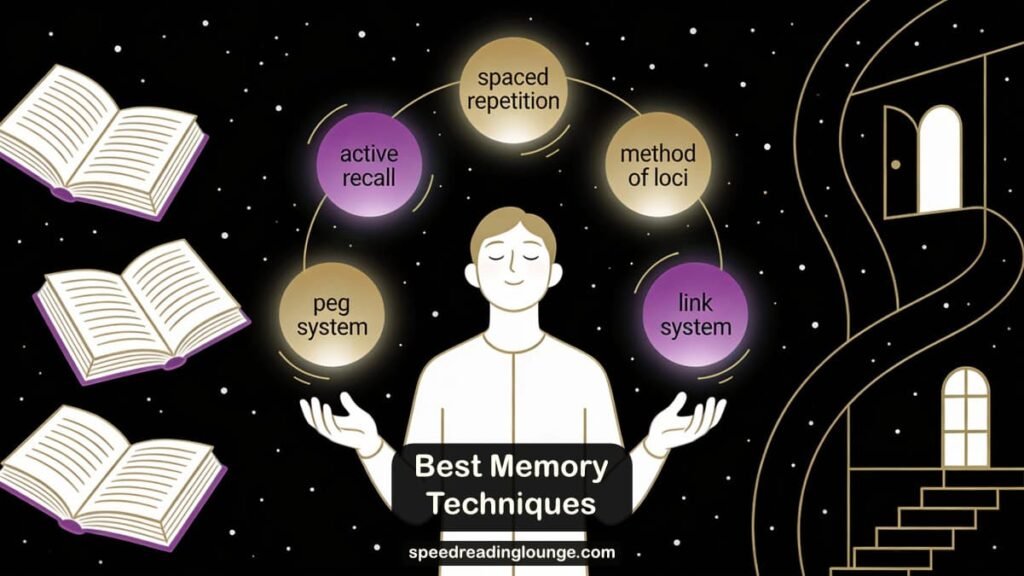
Why Memory is Important for Students
Memory is the foundation of learning.
Students use memory every day to:
- Remember classroom lessons
- Learn new vocabulary
- Solve mathematical problems
- Recall facts during exams
- Follow instructions
- Build knowledge over time
Strong memory skills help students:
✔ Learn faster
✔ Retain information longer
✔ Improve concentration
✔ Perform better in exams
✔ Build confidence
✔ Reduce study stress
How Memory Works
Before learning memory techniques, it’s important to understand how memory functions Memory Techniques.
Step 1: Encoding
The brain receives and processes information.
Step 2: Storage
The information is stored in short-term or long-term memory.
Step 3: Retrieval
The brain recalls stored information when needed.
Effective memory techniques improve all three stages.
15 Powerful Memory Techniques for Students
1. Active Recall
Active recall is one of the most effective study methods.
Instead of repeatedly reading notes, test yourself.
Example
After studying a chapter:
- Close the book.
- Write down everything you remember.
- Check for mistakes.
Benefits
- Stronger memory retention
- Better exam preparation
- Faster recall
2. Spaced Repetition
Most students forget information because they don’t review it regularly.
Spaced repetition involves reviewing information at increasing intervals.
Suggested Schedule
- Day 1: Learn
- Day 2: Review
- Day 7: Review again
- Day 30: Final review
This technique helps transfer information into long-term memory.
3. Mind Mapping
Mind maps visually organize information Memory Techniques.
Example
Main Topic → Subtopics → Key Points
Mind maps help students see connections between ideas.
Benefits
- Better understanding
- Faster revision
- Improved recall
4. Visualization Technique
The brain remembers images better than words.
Convert information into mental pictures.
Example
To remember “photosynthesis,” imagine a giant leaf creating food using sunlight Memory Techniques.
Benefits
- Easier recall
- Better understanding
- Stronger memory formation
5. Chunking Method
Chunking means breaking large information into smaller groups.
Example
Instead of remembering:
1947195219992024
Remember:
1947 | 1952 | 1999 | 2024
Benefits
- Reduced mental load
- Improved recall speed
6. Teach Someone Else
Teaching is one of the best ways to learn.
Explain concepts to:
- Friends
- Parents
- Siblings
If you can teach it, you understand it.
Benefits
- Better comprehension
- Stronger memory retention

7. Use Mnemonics
Mnemonics are memory shortcuts.
Example
For the planets:
My Very Educated Mother Just Served Us Noodles
(Mercury, Venus, Earth, Mars, Jupiter, Saturn, Uranus, Neptune)
Benefits
- Quick recall
- Fun learning experienc
8. Create Stories
The brain loves stories.
Convert facts into interesting narratives.
Example
Instead of memorizing dates, create a story around historical events.
Benefits
- Improved retention
- Easier learning
9. Practice Mental Math
Mental Math strengthens working memory and concentration.
Students mentally solve:
- Addition
- Subtraction
- Multiplication
- Division
Benefits
✔ Better memory
✔ Improved focus
✔ Faster thinking
✔ Stronger problem-solving skills
Mental Math exercises train the brain to process and retain information efficiently Memory Techniques.
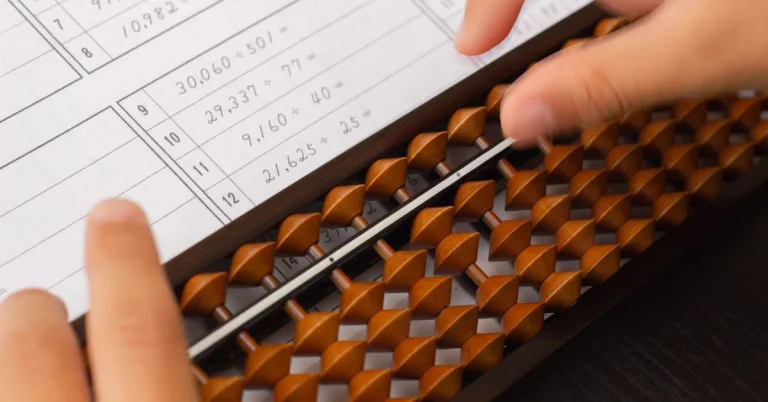
10. Learn Through Abacus Training
Abacus training is one of the most effective brain development techniques.
Students visualize the abacus mentally while performing calculations.
Benefits
- Improved memory
- Better concentration
- Enhanced visualization
- Faster calculations
Abacus training develops both left and right brain functions simultaneously.
11. Use Flashcards
Flashcards are excellent for memorizing:
- Vocabulary
- Formulas
- Definitions
- Dates
How to Use
Question on one side.
Answer on the other.
Review regularly.
Benefits
- Quick revision
- Active learning
12. Read Aloud
Reading aloud engages multiple senses.
The brain:
- Sees information
- Hears information
- Processes information
This improves retention significantly.
13. Get Quality Sleep
Sleep is critical for memory formation.
During sleep, the brain organizes and stores information learned during the day.
Student Sleep Recommendations
| Age Group | Sleep Needed |
|---|---|
| 6–12 Years | 9–12 Hours |
| 13–18 Years | 8–10 Hours |
Lack of sleep reduces memory performance.
14. Exercise Regularly
Physical activity improves blood flow to the brain.
Best Activities
- Running
- Cycling
- Swimming
- Yoga
Benefits
- Better focus
- Enhanced memory
- Reduced stress
15. Follow a Brain-Healthy Diet
Nutrition directly affects memory and concentration.
Best Brain Foods
- Eggs
- Fish
- Walnuts
- Almonds
- Blueberries
- Oats
- Green vegetables
Book Your FREE Demo Class
Fill this quick form — our team will email & call you back within 24 hours.
These foods provide nutrients essential for learning and cognitive development Memory Techniques.
Common Memory Mistakes Students Make
Rereading Notes Repeatedly
Passive reading is less effective than active recall.
Last-Minute Cramming
Information is quickly forgotten.
Multitasking
Studying while using social media reduces concentration.
Lack of Revision
Without review, most information is forgotten.
Poor Sleep Habits
Memory consolidation occurs during sleep.
Avoiding these mistakes can dramatically improve learning outcomes Memory Techniques.
Daily Memory Improvement Routine for Students
Morning
- Healthy breakfast
- 10 minutes Mental Math
School Time
- Take notes actively
- Ask questions
Evening
- Review lessons
- Use flashcards
Night
- Quick revision
- Proper sleep
Consistency is the key to memory improvement.
How Brain Skool Helps Students Improve Memory
At Brain Skool, students participate in specialized cognitive development programs designed to improve:
Memory Power
Visualization and memory-building exercises strengthen recall ability.
Concentration
Students learn techniques to increase focus and attention span.
Mental Math Skills
Mental calculations improve working memory and analytical thinking.
Abacus Training
Abacus develops visualization, memory, and faster information processing.
Academic Performance
Enhanced memory leads to improved classroom performance and exam results.
Brain Skool’s scientifically designed programs help students develop lifelong learning skills Memory Techniques.
Conclusion
Strong memory is not a gift that only a few students possess—it is a skill that can be developed with the right techniques and consistent practice Memory Techniques.
Methods such as active recall, spaced repetition, visualization, Mental Math, Abacus training, mind mapping, and healthy lifestyle habits can dramatically improve memory and academic performance.
Students who learn how to remember information effectively gain a significant advantage in school and beyond.
Start applying these memory techniques today and unlock your full learning potential Memory Techniques.
Frequently Asked Questions (FAQs)
1. What is the best memory technique for students?
Active recall and spaced repetition are considered two of the most effective memory techniques for long-term retention.
2. How can students improve memory quickly?
Students can improve memory through regular revision, Mental Math practice, visualization, quality sleep, and healthy nutrition.
3. Does Mental Math improve memory?
Yes. Mental Math strengthens working memory, concentration, and information processing speed Memory Techniques.
4. Is Abacus useful for memory development?
Absolutely. Abacus training improves visualization, concentration, memory retention, and cognitive skills.
5. How many hours should students sleep for better memory?
Most students need 8–10 hours of sleep depending on age for optimal memory performance.
6. What foods improve memory for students?
Eggs, fish, walnuts, almonds, berries, oats, and leafy vegetables support brain health and memory Memory Techniques.
7. Why do students forget what they study?
Common reasons include lack of revision, poor sleep, stress, distractions, and ineffective study methods.
8. How does spaced repetition work?
Spaced repetition involves reviewing information at regular intervals to strengthen long-term memory.
9. Can exercise improve memory?
Yes. Physical activity improves blood circulation to the brain and enhances cognitive performance.
10. Which program is best for improving memory and concentration in students?
Programs that combine Mental Math, Abacus Training, Visualization Techniques, and Brain Development Activities are highly effective for improving memory, concentration, and academic success Memory Techniques.
Why Memory Training Matters for Indian Students
From board exams to competitive entrances like Olympiads, NTSE and later JEE/NEET, Indian students are tested heavily on recall. Yet no school actually teaches HOW to remember. That is the gap memory science fills – techniques like the memory palace, peg systems and spaced revision can double retention within weeks of practice. Brain Skool’s memory programs are designed for students aged 6-16 and are taught live by certified trainers, with practice drills, revision planners and parent progress updates. Sessions are online, so students from any city in India can join.
Quick Facts
- Ideal for: students preparing for exams and Olympiads
- Techniques: memory palace, peg system, linking, speed reading
- Format: live online classes across India
- First step: a free demo session
🧠 Book a FREE Demo Class for Your Child
Abacus • Vedic Maths • Coding • Robotics • Memory Training — Ages 4 to 16, Online Classes Across India
💬 WhatsApp Us Now 💬 WhatsApp Us Now 📝 Enquire NowOr call us: +91 80946 42826 / +91 89497 08793